
Not yet accepting patients. Please call or text for more information.

Home / Military/Veterans
We understand the sacrifices made in service to our country, and the challenges service members and veterans can face when struggling with addiction. Renovia Behavioral Health offers structured outpatient care in Wilmington, NC, and a path to long-term recovery for those who have served and the families who stand with them.
Call or text 833-813-HELP. A real person from our team follows up.
Veterans Crisis Line: Dial 988, then press 1 · Text 838255 · Free, confidential, any hour of any day
No forms to start. Tell us what is going on, and someone from our team will follow up.
If you are struggling with alcohol or drugs after service, you are in good company. It happens to people of every rank, branch, and era, including people who were great at their jobs.
veterans of the wars in Iraq and Afghanistan seen at the VA have a problem with alcohol or other drugs.
veterans seeking treatment for a substance use disorder also have PTSD.
adults who have ever had a drug or alcohol problem say they are in recovery or have recovered.
National figures from the VA National Center for PTSD and the 2024 National Survey on Drug Use and Health (SAMHSA). These are not Renovia Behavioral Health results.
That last number matters most. Recovery is not the exception. It is what usually happens when people get the right support.
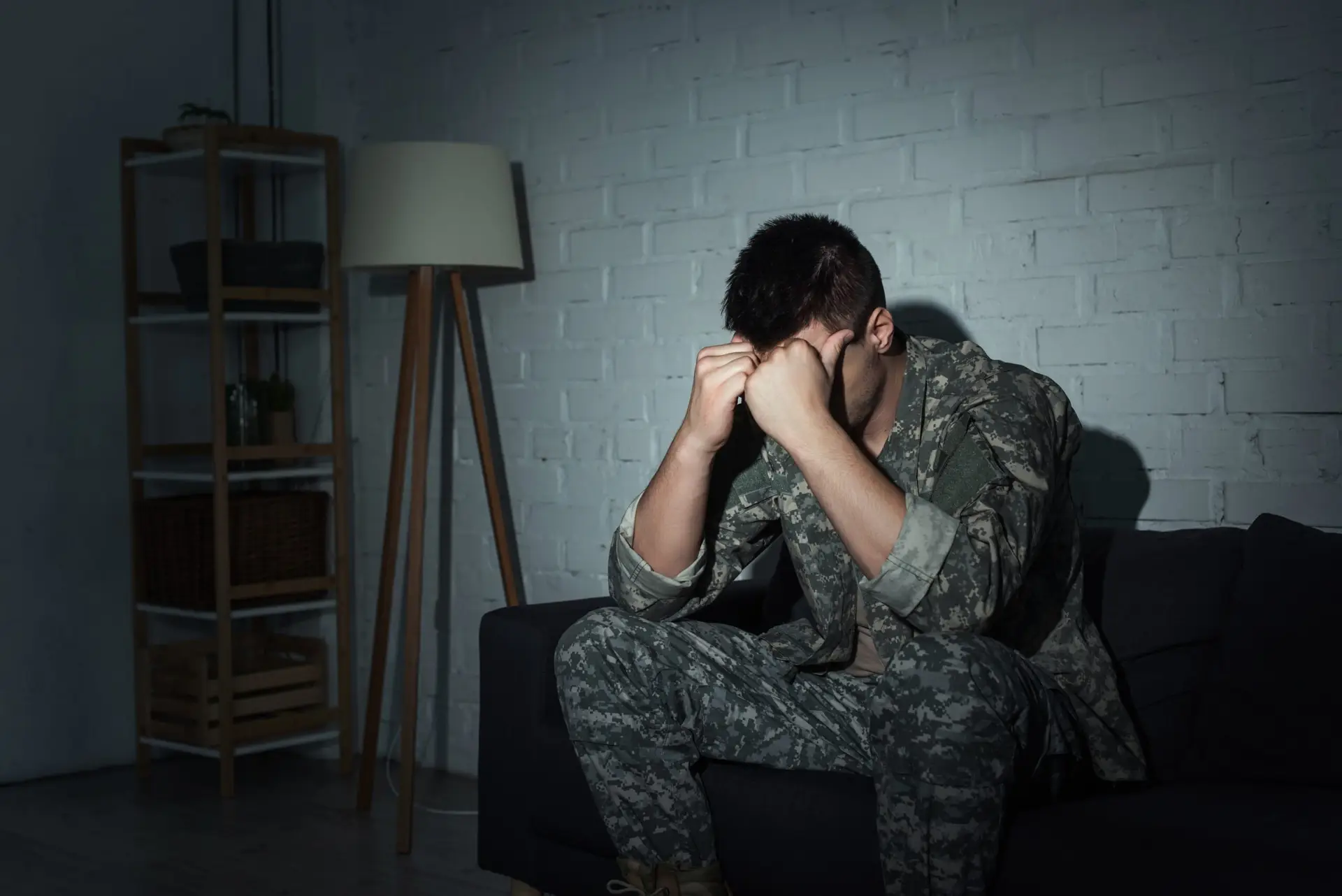
Many service members and veterans have lived through trauma during their service, including combat stress, injuries, and post-traumatic stress disorder (PTSD). Chronic pain can lead to pain medication that becomes hard to stop. Alcohol and drugs can start as a way to cope with what you saw, what you lost, or what still keeps you up at night.
Service gives you structure, camaraderie, and a sense of purpose. Leaving can take all three away at once. That loss can bring isolation, depression, and anxiety, and drinking or using can quietly fill the gap. For many, heavy drinking was already part of how the unit blew off steam, so it is hard to see when it has become a problem.
Military culture values strength, resilience, and self-reliance. Those are real strengths. They can also make it hard to admit you are struggling. Many service members and veterans worry about judgment, stigma, or what asking for help could mean for a career or a reputation in the military community.
Many veterans believe they should be able to handle this on their own. You were trained to push through, solve problems, and not complain. Those are real strengths. They can also keep a person from asking for help long after it is needed.
Calling for backup was never weakness in the field. It is not weakness now. It is how missions succeed.
You did hard things for other people. You are allowed to do this one for yourself.
Renovia Behavioral Health offers two levels of outpatient care. You live at home, or at Renovia Sober Living, and come to us during the program day.
| Program | Schedule | Often a fit for veterans who |
|---|---|---|
|
Day Treatment (PHP) |
5 days a week, 5 hours a day |
Want daily structure and support while they get steady. |
|
Intensive Outpatient (IOP) |
Monday, Wednesday, and Friday, 3 hours a day |
Are working, or stepping down from PHP, and want ongoing support. |
Recovery does not end on your last day with us. As you get steadier, you can step down from Day Treatment (PHP) to Intensive Outpatient (IOP). Peer support and Renovia Sober Living, with morning and nightly check-ins, can help you build a life in recovery that lasts.
Every client starts with a full clinical assessment. A clinician looks at your substance use history, possible withdrawal, your mental health, and the rest of your life. The recommendation covers all six dimensions of the ASAM Criteria, the national standard for matching people to the right level of care.
Your care is backed by a whole team. Our clinicians meet every week to review each plan, so you get the benefit of all our experience. If your needs change, your plan changes with you. Moving to a different level of care is a step toward success, not a punishment.
Deployments, moves, long absences, and the stress of the transition home affect the whole family. Spouses and adult family members of service members and veterans can struggle with substance use too, and they are welcome here.
If you are worried about a veteran you love, you can contact us before they agree to anything. We can answer your questions about how care works. Our page on Helping Someone You Love walks through how to start that conversation.
Renovia Behavioral Health works with commercial insurance plans. Many veterans have commercial coverage through an employer or a spouse’s plan, and our team can check your benefits before you start.
If your coverage is through TRICARE or the VA, call us anyway. We will tell you honestly what is possible. If we are not the right fit for your coverage, we will help you think through where to turn next.
Accredited Veterans Service Officers help veterans with VA benefits and claims at no cost. If you have questions about how treatment fits with your VA benefits, a service officer is a good person to ask.
Tell us what is going on. We listen and gather some basic information. Nothing has to be decided on that first contact.
We collect your background ahead of time so your first visit is focused on you, not paperwork.
We place you in the group that fits you best and build your treatment plan from there.
If you need detox or a higher level of care first, we will help you find the right place. We will be here for you when you are ready to step down.
Reach out, ask your questions, and let a real person help you plan the next step. You do not have to carry this alone.
Renovia Behavioral Health is opening soon in Wilmington, NC, and is not affiliated with the U.S. Department of Veterans Affairs or the Department of Defense. If you are in danger right now, call 911, or dial 988 and press 1 for the Veterans Crisis Line.
"*" indicates required fields
"*" indicates required fields